


Pest Identification: Blow Flies
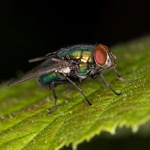
Blow flies are one of the most commonly seen insects around the world. Their green, blue, purple or coppery color is distinctive. They are usually the first to arrive when an animal dies, especially if it was bleeding. The presence of large numbers of blow flies in structures usually indicates an animal has died in or under the structure or chimney.
Worldwide the blow fly family includes over 1000 species. Blow fly species are found throughout all regions of the world from the poles to the equator. Common names for blow flies include bluebottle, greenbottle, black blow flies or carrion flies.
They often infest wounds of sheep, goats, cattle, and other animals. Adult blow flies are attracted to nectar, carrion, garbage, and other refuse and soggy, bloody or soiled hair, fur, or wool. As a rule, most blow fly larvae do not attack healthy tissue.
In general, each female blow fly deposits thousands of eggs over her 2- to 8-week life span. Egg masses may consist of 40 to over 1,000 eggs, but the larger masses are usually the result of oviposition by several females at the same location. Incubation may last 4 to 4.5 days, but hatching usually occurs in less than 24 hours when conditions are warm and humid.
Depending on temperature and the substrate upon which they are feeding, maggots usually complete development in 4 to 10 days. At the end of this period, larvae typically burrow in the upper centimeters of the soil and pupate for up to a week. Adult flies emerge make their way to the soil surface. About 1 week later, females begin to deposit eggs and the life cycle is repeated. Blow flies usually develop from egg to adult in only 10 to 25 days and complete 4 to 8 generations each year.
When flies are an issue, the source must be found and removed, and then it is just a matter of killing off the adult flies.
Buzzwords

Safer Pest Protection: Yard Sprays vs. Flea Collars for Your Dog
Your dog deserves to play safely outdoors, without the threat of pests or harsh chemicals. But between flea collars, topical treatments, and yard sprays, pest control can feel overwhelming, especially if you’re trying to do the right thing for your dog and your...
Why Cockroaches Are So Hard to Eliminate: And What Actually Works
300 million years. That’s how long cockroaches have been crawling the planet. They’ve survived shifting climates, mass extinctions, and even the dinosaurs. So it’s no surprise they can be tough to get out of a home. But what makes these pests so resilient? And what...

Planning a Winter Getaway? How to Avoid Bringing Bed Bugs Home
Holiday and winter travel is supposed to bring back memories, not pests. But between packed suitcases, busy schedules, and hopping from hotels to rentals to spare rooms, it’s surprisingly easy to bring home an unwanted souvenir: bed bugs. Before you cringe, take a...