


Termite FAQs
Advanced Termite Bait Station Program
How do termite bait stations work?
Stations are placed in the soil around your home. Once termites are detected, the station is switched to a toxic bait that termites feed on and carry back to their colony, gradually eliminating the threat.
How long does it take to eliminate the termite colony?
Bait stations work over time, often several weeks to a few months. Because they rely on termite feeding behavior, speed depends on colony size, placement, and environmental conditions.
Are advanced termite bait stations safer than liquid treatment?
Bait systems are lower impact and don’t involve chemical applications to the soil. They are an excellent option for sensitive environments, but may not act as quickly as liquid treatments.
Do I have to be home for termite bait monitoring visits?
No. As long as we have access to the perimeter, we can inspect and service the stations. We'll leave service notes after each visit and reach out if we need anything.
Can I switch to liquid later?
Yes. If your property conditions change or you’d like to switch methods, we can credit part of your baiting investment toward a liquid treatment.
Are the termite bait stations visible?
They are low-profile, placed flush with the ground, and are usually not noticeable unless pointed out. We recommend informing landscapers so they do not disturb them.
Will advanced bait stations prevent future termite infestations?
Yes. When maintained properly, baiting programs work preventatively and help intercept termites before they can cause damage.
Why is liquid termite treatment recommended first?
Liquid treatments act faster and reduce the risk of termite damage more quickly. Baiting works well, but typically takes longer to eliminate the colony.
Liquid Termite Treatment
How long does liquid termite treatment last?
Liquid treatments can remain effective for several years, as long as the treated soil remains intact and undisturbed. Annual inspections help confirm that the barrier is still performing as intended and allow your warranty to remain in place. If any termites are found during a warranty inspection, we will retreat the affected areas as part of your warranty.
Will I see dead termites after the liquid treatment service?
Not necessarily. Liquid termite products are non-repellent and slow-acting, designed so that termites spread them to their entire colony before dying. Because the process happens inside the colony and beneath the soil, you may never see visible evidence of dead termites even though the treatment is working.
Do you offer a warranty for your termite treatments?
Yes. Termite treatments include a one-year warranty, which covers free re-treatment if termite activity reappears in a treated area during the warranty period.
Extended warranties can be renewed annually and include inspections and re-treatment if new signs of activity are found.
Warranties are renewable and may be transferred to new owners depending on the program.
Is liquid termite treatment better than bait stations?
Liquid treatments offer faster protection and are less reliant on termite behavior. We recommend the liquid treatment method for most homes due to its immediate effectiveness and long-lasting protection.
Do I need to leave the house for liquid termite treatments?
No. The treatment is applied externally and does not require you to vacate the home. Interior work is only done in special cases, and we will let you know in advance.
What preparation is needed before a liquid termite treatment service?
Please remove mulch, debris, and personal items around the base of the foundation. If an injection is needed through concrete, we will discuss drill points in advance.
Can liquid termite treatment be combined with a pest control plan?
Yes. Many of our customers choose to pair termite treatment with our Ultimate Pest Plan for full protection against both termites and common pests.
WDO / VA / FHA Pest Inspection (NPMA-33 Form)
What does a wood-destroying organism (WDO) inspection include?
We inspect all accessible areas of the property for evidence of wood-destroying insects such as termites, carpenter ants, and beetles. The results are documented on the official NPMA-33 form.
Is anything treated during this WDO inspection?
No. This is an inspection only. If we find anything, treatment recommendations can be made afterward.
Can you check above ceiling tiles or behind insulation during a WDO inspection?
No. We do not remove ceiling tiles, insulation, or screwed hatches. If you want these areas inspected, they must be made accessible before we arrive.
Can I get the NPMA-33 form the same day as the WDO inspection?
Yes, but the inspection must be paid in full before we release the form.
Are your termite inspections accepted for VA and FHA loans?
Yes. The NPMA-33 form we complete is accepted for VA, FHA, and other lender requirements.
How long does the termite inspection take?
Most appointments take between 45 and 60 minutes, depending on the property’s accessibility.
What happens if I lose the NPMA-33 form from my termite/WDO inspection?
We retain a digital copy and can resend it at any time upon request.
General Termite Information
Annual inspections are essential because termite colonies constantly shift and expand in the soil around your home. In Massachusetts, there can be 15–20 termite colonies per acre, and each colony can contain hundreds of thousands of termites. When one colony weakens or is eliminated, nearby colonies naturally move in to fill that territory.
Because of this ongoing pressure, the baiting or liquid system protecting your home must be inspected and maintained every year to ensure it continues to intercept new termite activity and protect the structure.
What types of termites are common in Massachusetts and New England?
Your termite protection covers subterranean termites, specifically Reticulitermes (Eastern Subterranean Termites), which are the species common in Massachusetts.
Heterotermes – Drywood termites and Formosan termites are not covered.
How likely is it that termites return after treatment?
Termites can return if protection is not continuously maintained. Even after treatment affects an active colony, new or unaffected colonies from the surrounding soil may move toward the home. For this reason, bait stations and treated zones must be kept active every year to maintain a barrier against future infestations. Without continued maintenance, your home becomes vulnerable again.
How can I prevent termites in the future?
The most reliable prevention method is maintaining your termite protection program annually.
Bait systems must stay monitored and rebaited as needed to intercept new colonies before they reach the home.
Liquid treatments remain effective for several years, but their protective zone must be inspected annually to ensure it hasn’t been disturbed.
Consistent inspection keeps the system reliable and maintains coverage under your warranty.
When is termite swarming season in Massachusetts?
Termite swarming is a brief springtime event—typically from April through June in Massachusetts—when winged reproductive termites leave their colony to mate and start new colonies.
What is the difference between bait vs. liquid termite treatment?
Liquid treatments are long-lasting and quick-acting, making them highly recommended for active infestations.
Termite baiting is designed for proactive, long-term protection.
Both methods eliminate termite colonies, but baiting works more slowly than liquid treatments during active infestations.
Liquid Treatments:
- Create a continuous treated zone in the soil around the home.
- Begin protecting the structure immediately.
- Use a non-repellent material, meaning termites cannot detect it and carry it throughout the colony during grooming and feeding.
- Typically eliminate colonies more rapidly and are ideal for active infestations.
Baiting Systems:
- Work by installing stations around the property.
- Require termites to locate the station, feed on bait, and spread it to the colony.
- Suppress or eliminate colonies over time.
- Require ongoing monitoring and rebaiting for continued protection.
Buzzwords
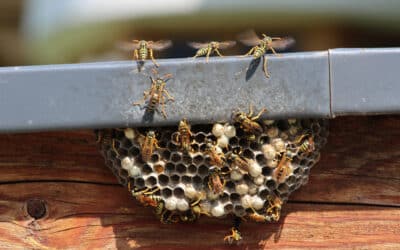
The Buzz on Wasp Infestations: A Complete Guide to Elimination
It’s the backyard barbeque guest no one wants: uninvited, aggressive and always ruining all the soda. No, we’re not talking about your cousin, we’re talking about wasps. It’s that time of year again, when wasps come out of hibernation to create new nests and wreak...

Mosquito-Proof Your Home: Tips and Tricks for a Bug-Free Environment
Mosquitoes are more than just a nuisance on a peaceful evening outdoors—they can turn your patio into a risky zone, buzzing with the threat of serious diseases. Thanks to a mild winter, you’re likely seeing mosquitoes earlier than ever. And as we head toward summer,...

The Top 9 Signs of a Mouse Infestation in Your Central Massachusetts Property
Mice. Every property gets them. In fact, a recent NPMA survey found that 1 in 4 Americans (27%) have found a rodent in their home in the past year. And, 1 in 10 Americans (9%) have experienced a full-fledged rodent infestation in their home in the past year. So if you...